


State-of-the-Art
Our 3D printing systems cover a wide range of materials and technologies. Ranging from metals (SLM) and ceramics (LCM), to polymers (PµSL, SLA, FDM/FFF, Polyjet) and biomaterials (Bioprinting). With alternative fabrication methods available, including melt-extrusion and laser engraving. Additionally, ANFF materials has the capacity to print flexible solar panels.

Formlabs Form 2 & 4B, Boston Microfabrication microArch® S240
Next-generation biocompatible resin 3D printers optimised for medical and dental applications, featuring rapid LFD (Low Force Display) and Projection Micro-Stereolithography (PµSL) printing.
Materials: Soft silicone-like + tough biocompatible resins
Speed & resolution: 0.028 mm/s & 10-50 micron
Applications: Implants, prosthetics, biomedical, dental, aerospace, mechanical - Biocompatible resin support with Class I FDA registration (US) and medical-grade workflows


Metal Printing
Our metal 3D printing focuses on SLM. This technology uses high-powered lasers to fully melt metal powders layer by layer.
-
High Performance: Achieves up to 99.9% density for custom metallic composites.
-
Premium Materials: Utilizes biocompatible Titanium (Ti64) and Stainless Steel (316L).
-
Precision Applications: Ideal for fabricating high-resolution electrodes, heat sinks, and mini bioreactors.


Polymer Printing
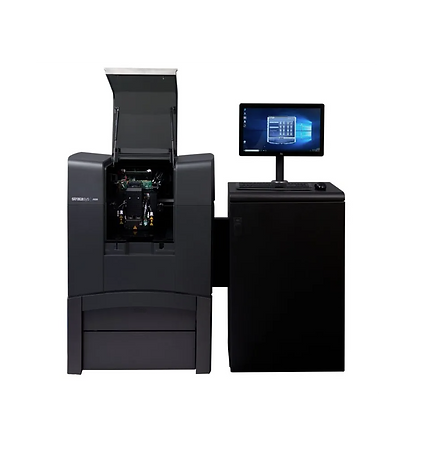
Our polymer printing includes biocompatible silicone-like materials on FormLabs systems (2 + 4B) + BMF S240, strong carbon-fibre and kevlar reinfoced nylon on Markforged Systems (M2 + X7), full colour inkjet printers from Stratasys (J35 + J826), and several FDM printers.
Ceramic Printing
Our ceramic printing includes highly dense and biocompatible parts utilizing materials such as alumina, zirconia, hydroxyapatite, and tricalcium phosphate on our Lithoz CeraFab 7500 and BMF S240 systems.


Material extrusion, Laser cutting
The materials node provides full capabilities for melt extrusion and the fabrication of fibrous structures across different scales, supported by a range of instruments including a twin-screw extruder for melt-spinning, electrospinning machine, and high power laser engraving systems